





Penalty abatement can be the simplest and most overlooked way to begin resolving tax debt. By reducing or removing IRS penalties, you immediately lower what you owe and set the stage for more realistic relief options like installment agreements or Offers in Compromise.
At J. David Tax Law, we’ve seen penalty abatements reduce debts by tens of thousands of dollars when applied early and supported with solid documentation. But the process is rarely easy. The IRS weighs every request carefully, and most denials come from missing details, poor timing, or a misunderstanding of the rules.
This guide outlines how penalty abatement fits into a complete tax resolution strategy. You’ll learn when it works, what the IRS looks for, and why starting with abatement often gives taxpayers their first real path toward lasting relief.
Key Takeaways
- Penalty abatement can reduce or remove IRS penalties that make up 25% to 40% of total tax debt.
- Removing penalties early lowers your overall balance and strengthens future settlement options.
- You can request an abatement for first-time compliance, reasonable cause, or IRS error.
- Approved abatement improves eligibility for Offers in Compromise and Installment Agreements.
- While abatement reduces penalties, full tax relief comes from combining it with a broader resolution strategy.
Why Penalty Abatement Is the First Move Toward Debt Relief
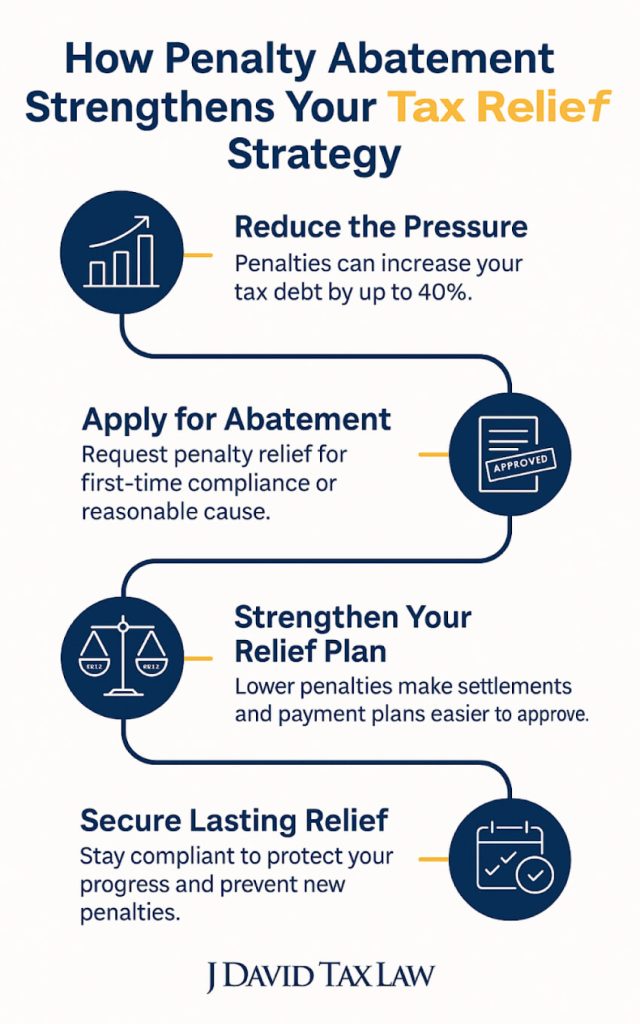
Penalty abatement addresses one of the biggest obstacles in tax resolution: IRS penalties that quickly turn a manageable balance into an overwhelming one. Late filing and payment penalties can increase a taxpayer’s debt by up to 40 percent, making it harder to qualify for affordable settlement options. Failure to pay the penalty alone can result in up to 25 percent of your unpaid taxes.
Removing those penalties early gives you room to breathe and makes every next step more effective. For instance, a smaller balance can improve your chances of approval for an Offer in Compromise or make an installment agreement easier to sustain. Promptly removing penalties also shows the IRS that you’re serious about fixing the problem and staying compliant moving forward.
We’ve seen this first step make a real difference for our clients. In one case, a penalty abatement saved over $150,000 after multiple state-level rejections. It took patience, detailed documentation, and the right follow-up with the agency, but that persistence turned a denied request into a complete waiver. Not every case ends this dramatically, yet addressing penalties early often reshapes the path to relief entirely.
How Penalty Abatement Works in the IRS Process
Penalty abatement removes the extra charges the IRS adds when a taxpayer files late, pays late, or fails to make required deposits. It doesn’t erase the original tax balance, but it can reduce a large portion of what makes repayment feel impossible.
The IRS reviews each request carefully. They look at your compliance history, the reason the penalties were applied, and the evidence supporting your claim. Strong documentation matters. Records that show a genuine hardship, such as illness or a natural disaster, are more persuasive than a general statement of financial struggle.
We’ve found that persistence with your abatement application often determines success. The IRS denies the majority of abatement requests for reasons like incomplete details or poor timing. When we refine the explanation, gather the right supporting records, and contact the right IRS department, the outcome often changes. The process takes effort, but when handled correctly, it can bring immediate and measurable relief.
When You Can Request Penalty Abatement
You can request penalty abatement when there’s a clear, verifiable reason for missing a filing or payment deadline. The IRS considers requests from taxpayers who’ve generally stayed compliant, faced genuine hardship, or can show that penalties were applied in error.
The most common route is the First-Time Abatement, meant for taxpayers who have a clean record and simply made one mistake. There’s also Reasonable Cause, which covers situations like illness, natural disasters, or reliance on bad advice that led to a delay. In rarer cases, penalties are removed after the IRS acknowledges an internal error or misapplied payment.
What often surprises people is how approachable this step can be when done correctly. Penalty abatement isn’t about legal arguments or perfect paperwork, but about telling the truth clearly and backing it up with evidence. When you do that, the IRS tends to listen.
How Penalty Abatement Strengthens Future Tax Relief Options
Penalty abatement is more than a financial reset. It’s a way to make every next step in your tax relief plan more effective. Once penalties are reduced, your total balance drops, and that lower number becomes the foundation for future negotiations with the IRS.
For example, if you’re planning to apply for an Offer in Compromise, the IRS uses your Reasonable Collection Potential to decide what you can afford to pay. Penalties inflate that number, which makes an offer harder to justify. By removing them first, you present a clearer and fairer picture of your financial situation and one that potentially leads to a stronger case.
Even if your goal is a payment plan rather than a settlement, penalty abatement helps there too. With fewer penalties in the mix, monthly payments become more manageable, and the timeline to full resolution shortens. It’s one of those rare steps in tax relief that pays off twice: first by lowering the debt, then by improving your options for what comes next.
When Penalty Abatement Isn’t Enough — What Comes Next
Penalty abatement can make a major difference, but it only removes penalties. The underlying tax and accumulated interest still need to be addressed through a complete resolution plan.
Once abatement is approved, review your remaining balance to determine the next best step. Some taxpayers qualify for an Offer in Compromise that settles the remaining debt for less than the full amount. Others may benefit more from a structured Installment Agreement that breaks payments into manageable amounts.
If your request for abatement is denied, do not stop there. You can appeal the decision or adjust your financial documentation before resubmitting. Many taxpayers who are initially denied are later approved once they correct errors or provide stronger evidence.
A penalty abatement is only one piece of the tax relief process. When combined with a broader plan for settlement and compliance, it becomes a powerful tool that brings lasting financial relief.
Secure professional help with a free tax resolution consultation.
Frequently Asked Questions About IRS Penalty Abatement
How does penalty abatement affect overall tax debt resolution?
Penalty abatement reduces the penalties added to your tax balance, which lowers your overall debt. This smaller balance makes it easier to qualify for payment plans or settlement programs like an Offer in Compromise.
Under what circumstances can penalty abatement be requested from the IRS?
You can request penalty abatement if you have a clean compliance record, a reasonable cause such as illness or natural disaster, or evidence that the IRS made an error. Documentation is required to prove your situation.
What are good reasons to request an abatement of IRS penalties?
Good reasons include unexpected medical emergencies, natural disasters, reliance on incorrect professional advice, or other serious situations beyond your control. The IRS must see clear evidence that you acted responsibly despite the setback.
What are the disadvantages of tax abatement?
Penalty abatement does not reduce the actual tax or interest you owe, only the penalties. If your request is denied or poorly documented, it can delay other relief options and extend the resolution timeline.
Is penalty abatement the same as tax forgiveness?
No. Penalty abatement removes specific charges for noncompliance, while tax forgiveness programs like an Offer in Compromise, reduce the total tax owed.