




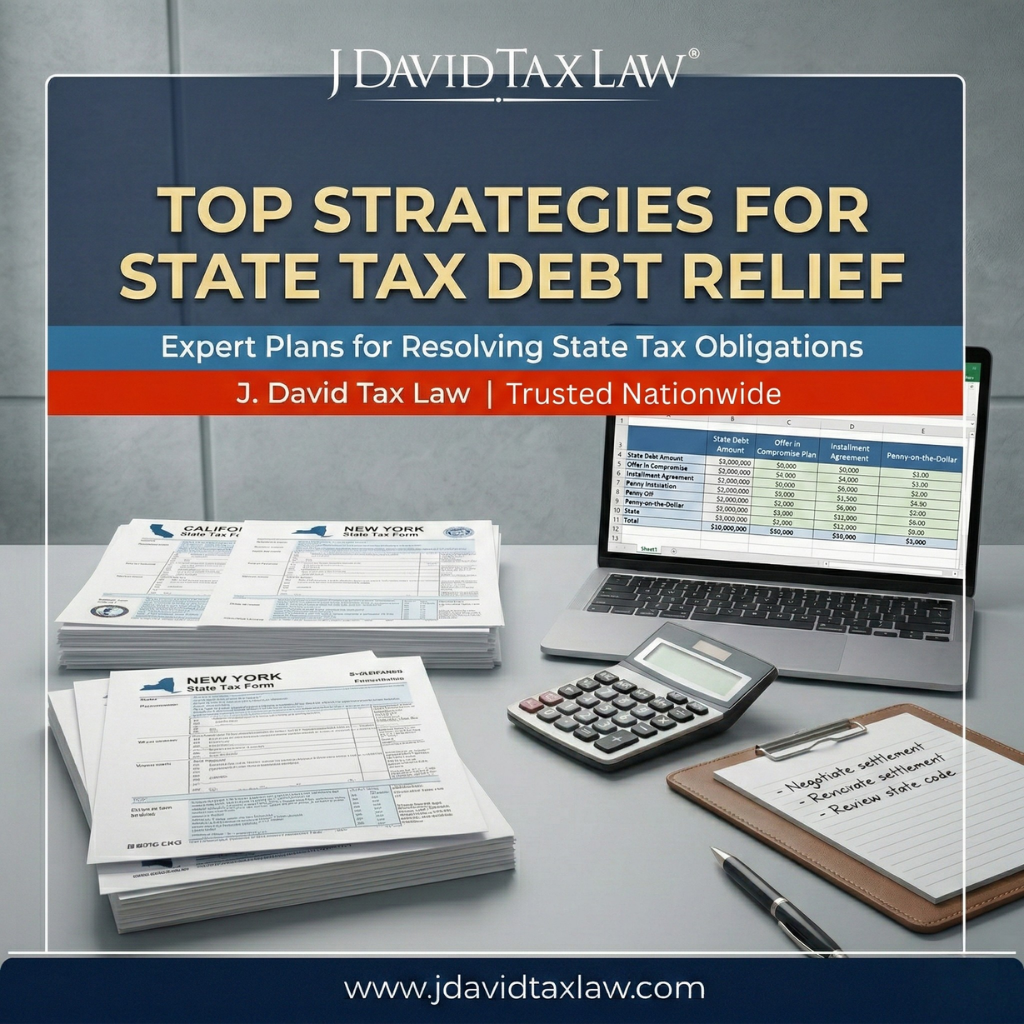
Top Strategies for State Tax Debt Relief
State tax debt presents complex legal and financial challenges. This article reviews principal relief strategies—settlement options, negotiation techniques, and payment plans—and explains the role of professional representation. Readers will receive practical guidance to address obligations, reduce financial exposure, and know when to seek expert assistance.
What Are the Key State Tax Debt Settlement Options Available?

Taxpayers facing state tax liabilities may qualify for several formal settlement mechanisms. Understanding these options helps secure more effective resolutions and reduces the risk of adverse enforcement.
Offer in Compromise (OIC)
An “Offer in Compromise” (OIC) lets a taxpayer settle a liability for less than the assessed amount. Qualification requires showing inability to pay and submitting comprehensive financial documentation. When approved, an OIC reduces the outstanding obligation and can aid financial recovery.
Installment Agreements
Installment agreements let taxpayers pay liabilities through scheduled monthly payments instead of a lump sum. Eligibility generally requires filing all returns and staying current on taxes. Installment plans ease immediate collection pressure while providing structured repayment.
Penalty Abatement
Penalty abatement is an administrative reduction or removal of penalties on unpaid taxes. Taxpayers must establish reasonable cause for noncompliance—such as serious illness or documented hardship—and submit a formal request to the state agency. Successful abatement lowers the total liability.
Currently Not Collectible Status
Currently Not Collectible (CNC) status temporarily suspends collection for taxpayers who cannot afford payments. Qualifying requires detailed financial disclosure showing inability to pay. CNC does not erase the debt but provides immediate relief from enforcement measures.
Fresh Start Program
Fresh Start Programs, offered by some states, modify terms to help resolve tax liabilities. Typical features include reduced penalties, adjusted interest, and flexible payment structures. Eligibility varies by jurisdiction and usually targets taxpayers in financial distress.
Professional Assistance
Retaining a tax attorney or certified public accountant (CPA) improves the odds of a favorable result. Professionals interpret law, prepare documentation, and negotiate with state authorities to secure appropriate relief for the taxpayer.
Which Tax Debt Negotiation Tactics Are Most Effective for State Tax Issues?

Strategic negotiation is central to resolving state tax disputes. Taxpayers who present documented, realistic proposals and engage constructively with authorities improve their chances of acceptable resolutions.
Effective negotiation requires recognizing the enforcement authority’s formal powers and the procedural context in which disputes are resolved.
Tax Dispute Negotiation Strategies for Taxpayers
Disputes between officials and citizens during tax enforcement differ from most civil disputes: they commonly begin when an official alleges noncompliance; they center on the correct interpretation of law; and the official possesses formal authority to render a binding enforcement decision. Using data from pre-audit interviews with taxpayers and state tax auditors, the study examines how these characteristics, the roles of the parties, citizens’ perceptions of officials’ orientations, and related factors drawn from regulatory and procedural justice research influence the strategies preferred by officials and taxpayers for resolving disputes.
Negotiating strategies for tax disputes: Preferences of taxpayers and auditors, LJ Stalans, 1994
Offer in Compromise (OIC)
As noted, an “Offer in Compromise” is a primary negotiation tool. Submit a complete financial statement and a reasoned offer that reflects your true ability to pay. Clear evidence of hardship and full documentation increase the chance of acceptance.
Installment Agreements
To negotiate an installment agreement, provide clear income and expense information and propose a sustainable monthly payment. Consistent compliance with the plan is essential to avoid default and renewed collection activity.
Penalty Abatement
Requests for penalty abatement should include corroborating evidence of reasonable cause, such as medical records or proof of job loss. A well-supported submission improves the probability of reduction.
Gathering Documentation
Comprehensive documentation underpins all negotiations. Assemble income records, expense statements, bank statements, and prior tax returns to substantiate offers and build credibility with the tax authority.
Understanding Financial Capability
Assess financial capacity accurately before proposing terms. Account for income, fixed and variable expenses, and other legal obligations to create realistic, sustainable proposals.
Setting Realistic Goals
Set attainable negotiation objectives grounded in documented financial reality. Overly ambitious demands risk rejection; measured flexibility often leads to compromise and acceptable outcomes.
Professional Guidance
Tax professionals provide legal and procedural expertise that can materially affect outcomes. Their guidance helps ensure submissions meet statutory criteria and that negotiations progress through proper administrative channels.
How Do State Tax Debt Payment Plans Work and Who Qualifies?
State tax payment plans create formal repayment schedules so taxpayers can satisfy liabilities over time. Eligibility and plan structures differ by jurisdiction and by the taxpayer’s compliance status.
Typical Terms and Conditions of State Tax Payment Plans
Payment plans specify duration, periodic payment amounts, and default conditions. They may include fees or interest and usually require continued filing and payment compliance. Review plan terms before accepting to confirm feasibility.
How Can Taxpayers Apply for State Tax Debt Payment Plans?
Applications are submitted to the state tax authority and typically require financial documentation. Prompt follow-up with the agency can speed processing and reduce enforcement risk during review.
| Payment Plan Type | Eligibility Criteria | Duration | Payment Amount |
|---|---|---|---|
| Installment Agreement | Must file all returns | Varies | Based on income |
| Offer in Compromise | Demonstrate inability to pay | One-time | Negotiated amount |
| Fresh Start Program | Financial hardship | Varies | Flexible terms |
The table summarizes key features of common payment mechanisms, including eligibility requirements and typical payment structures.
What State Tax Debt Forgiveness Programs Exist and How Can You Access Them?
Some jurisdictions offer tax forgiveness or relief programs that may reduce or eliminate outstanding tax liabilities for eligible taxpayers. Eligibility and application procedures vary by state.
Which States Offer Tax Debt Forgiveness and What Are Their Requirements?
States design forgiveness programs with specific eligibility criteria that may include income thresholds, documented financial hardship, or participation in compliance programs. Consult your state tax authority for precise requirements and application instructions.
How Does Tax Debt Forgiveness Impact Your Financial Obligations?
Forgiveness can reduce immediate liabilities but may have secondary consequences. Forgiven amounts can be treated as taxable income in some circumstances, and credit-reporting effects are possible. Consult a tax professional to evaluate tax and financial implications before accepting forgiveness.
| State | Program Name | Eligibility Criteria | Application Process |
|---|---|---|---|
| California | Tax Relief Initiative | Low-income taxpayers | Online application |
| New York | Tax Forgiveness Program | Financial hardship | Submit documentation |
| Texas | Fresh Start Program | Unpaid tax liabilities | Contact tax authority |
Frequently Asked Questions
What should I do if I can't afford my state tax payments?
If you cannot afford state tax payments, evaluate formal relief such as an Offer in Compromise or an installment agreement. You may qualify for Currently Not Collectible status to suspend enforcement temporarily. Engage a tax professional to assess eligibility and prepare documentation.
How can I find out if I qualify for a Fresh Start Program?
Confirm eligibility by consulting your state tax authority’s program guidance. Fresh Start Programs usually require evidence of financial hardship and documentation of income and expenses. A tax professional can help determine qualification and prepare the application.
What documentation is needed for tax debt negotiation?
Collect financial records to substantiate your position: income statements, expense ledgers, bank records, and prior tax returns. For penalty abatement, include supporting documents such as medical records or employment termination notices. Thorough documentation strengthens credibility.
Can I negotiate my state tax debt on my own?
You may negotiate independently, but successful negotiation requires familiarity with statutes and administrative procedures. Retaining a tax attorney or CPA can improve outcomes by ensuring procedural compliance and presenting a legally sound case.
What are the potential consequences of tax debt forgiveness?
Forgiveness relieves liability but may generate taxable income and affect credit profiles. The precise consequences depend on statutory treatment and reporting. Seek professional advice to assess tax, reporting, and financial implications before accepting forgiveness.
How long does it take to process a tax debt relief application?
Processing times vary by relief type and state workload and can range from several weeks to multiple months. Submitting complete documentation and staying in contact with the tax authority can reduce delays.
What happens if I miss a payment on my installment agreement?
Missing a payment may lead to default, reinstated collection actions, and additional penalties and interest. If you cannot pay, contact the tax authority promptly to discuss modification or temporary relief to avoid enforcement escalation.
Conclusion
Resolving state tax debt requires assessing available remedies—Offers in Compromise, installment agreements, penalty abatement, CNC status, and state relief programs—and choosing the appropriate path. Professional representation enhances compliance and negotiation effectiveness. Consult a qualified tax professional to determine the best approach for your circumstances.