




Last updated on June 24th, 2026 at 11:39 am
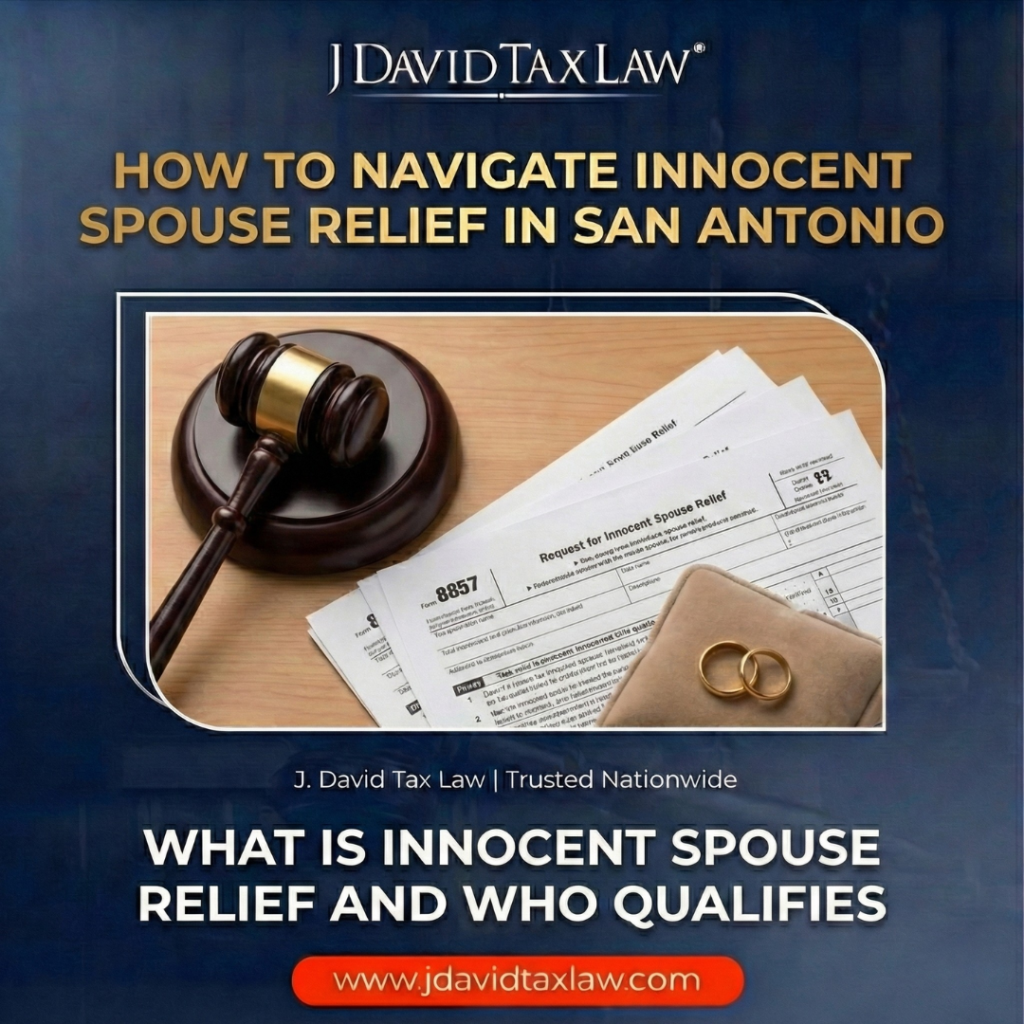
How to Navigate Innocent Spouse Relief in San Antonio — Expert Guidance to Resolve Tax Debt
Tax problems can feel overwhelming when a debt ties to a spouse’s return. Innocent spouse relief can protect taxpayers unfairly held responsible for a partner’s errors. Below we explain who may qualify in Texas, how to apply, and why partnering with an experienced San Antonio tax attorney can improve your chances of relief.
What Is Innocent Spouse Relief and Who Qualifies in Texas?
Innocent spouse relief lets a taxpayer seek relief from tax, penalties, and interest arising from a spouse’s errors or omissions on a joint return. It is for people who didn’t know and had no reason to know, about the understatement or who did not benefit from the income that caused the tax. Texas’s community property rules affect how liability is viewed, so local factors matter when pursuing relief.
Understanding Innocent Spouse Relief and Its Types
The IRS recognizes three primary forms of innocent spouse relief:
- Innocent Spouse Relief: For taxpayers who can show they did not know about the understatement or erroneous items on a joint return.
- Separation of Liability Relief: Allocates tax liability between spouses when they are divorced, legally separated, or have not lived together for at least 12 months.
- Equitable Relief: Available when the other two options do not apply and it would be unfair to hold the requesting spouse responsible.
Eligibility Criteria for Innocent Spouse Relief in San Antonio
To pursue innocent spouse relief in San Antonio you typically must meet key conditions:
- Joint Tax Return: The claim applies to years when you filed a joint return.
- Lack of Knowledge: You must show you did not know — and had no reason to know — about the understatement or erroneous items.
- Timely Application: Most claims must be filed within two years after the IRS first seeks collection from the spouse seeking relief.
How to Apply for Innocent Spouse Relief Using IRS Form 8857
Submit IRS Form 8857 to request relief. The form requires details about the return, the shortfall, and facts supporting your claim, so clear documentation is important.
Step-by-Step Guide to Completing Form 8857
- Gather Documentation: Collect the joint return, IRS notices, bank records, and any evidence that supports your account.
- Complete the Form: Fill out Form 8857 carefully; provide concise explanations and reference supporting documents.
- Submit the Form: Mail Form 8857 to the address in the instructions, keep proof of mailing, and meet filing deadlines.
Required Documents and Application Tips for San Antonio Residents
Before filing, assemble supporting records:
- Joint Tax Returns: Copies of the return(s) at issue.
- IRS Correspondence: Any notices, collection letters, or assessments.
- Proof of Lack of Knowledge: Evidence such as limited access to finances, separation paperwork, or proof your spouse controlled household finances.
What Are the Exceptions and Special Circumstances in Innocent Spouse Relief?
Some facts can affect a claim. Knowing common exceptions helps you prepare a stronger application or decide when to get legal help.
Domestic Abuse Exceptions and Protections in Texas
The IRS recognizes that domestic abuse can limit a person’s ability to learn about or challenge financial decisions. When abuse is documented, the IRS may grant relief even if knowledge of the tax issue is disputed. Legal advice can help gather evidence and present the claim sensitively.
Community Property Laws Impacting Spouse Relief in San Antonio
Texas community property rules treat income and debts acquired during marriage as jointly owned, which can complicate innocent spouse claims. Address community property implications when negotiating with the IRS or considering relief options. For related options, see Currently Not Collectible.
| Type of Relief | Description | Eligibility Criteria |
|---|---|---|
| Innocent Spouse Relief | Relief when a spouse was unaware of the understatement or errors on a joint return | Must show lack of knowledge or reason to know about the error |
| Separation of Liability Relief | Allocates tax liability between spouses after separation or divorce | Available if divorced, legally separated, or living apart for 12 months |
| Equitable Relief | Relief in cases where the other types don’t apply and fairness requires it | Must demonstrate it would be unfair to hold the requesting spouse responsible |
Why Choose a San Antonio Innocent Spouse Relief Attorney?
IRS and state tax issues are stressful; a local attorney familiar with innocent spouse relief and Texas law can guide you through paperwork, deadlines, and negotiations so you do not face the process alone.
Benefits of Attorney-Led Representation for IRS Tax Debt
- Expert Negotiation: Attorneys know how to present your case and work with IRS examiners and collections officers.
- Higher Success Rates: Experienced counsel can improve outcomes by addressing IRS concerns and documenting claims thoroughly.
- Personalized Legal Strategies: A lawyer tailors the approach — whether filing Form 8857, pursuing equitable relief, or handling community property issues.
How J. David Tax Law Supports Innocent Spouse Relief Clients in San Antonio
J. David Tax Law handles IRS and state tax problems, including innocent spouse claims. We emphasize attorney-led representation and practical solutions to protect clients’ rights and financial futures, combining technical knowledge with advocacy to help San Antonio residents resolve cases.
Book a free spousal relief consultation today.
Frequently Asked Questions
What is the process for appealing a denied innocent spouse relief request?``
If the IRS denies your claim, file a written protest explaining why you disagree and attach supporting documents. You generally have 30 days from the denial letter to appeal. A tax attorney can help frame the protest and address the denial reasons.
Can I apply for innocent spouse relief if I am currently separated from my spouse?
Yes. You can apply while separated if you meet eligibility requirements, including that you filed a joint return and can show you did not know about the tax issue. If separated or divorced for at least 12 months, separation of liability relief may be available.
How long does it take to process an innocent spouse relief application?
Processing varies. The IRS often takes several months to review Form 8857, depending on complexity and requests for more information. If you do not hear back within six months, follow up or consult an attorney to keep the process moving.
What happens if my spouse refuses to cooperate during the application process?
You can still apply without your spouse’s cooperation. Provide whatever evidence you have that supports your lack of knowledge and document the refusal to assist; the IRS will evaluate your claim on the submitted information.
Are there any tax implications after receiving innocent spouse relief?
Relief removes responsibility for the specified tax debt, but refunds or credits may still be offset for other federal obligations (for example, child support or student loans). Consult a tax professional about how relief affects your overall tax situation and future filings.
Can I still qualify for innocent spouse relief if I filed jointly with my spouse for many years?
Yes. A long history of filing jointly does not automatically disqualify you. The key is demonstrating you did not know about the understatement or errors for the year in question and meeting other eligibility rules, including timely filing.