




Last updated on June 24th, 2026 at 11:33 am
Can the IRS Freeze Your Bank Account in Houston Without Warning?
You check your bank account to pay bills, and suddenly discover your balance is zero or shows a hold you didn’t authorize. Your debit card is declined at the grocery store. Direct deposits aren’t accessible. When you call your Houston bank, they inform you that the IRS has placed a levy on your account, and the funds are frozen pending transfer to the federal government.
This nightmare scenario happens to thousands of Houston residents and business owners every year. While the situation feels like it came “without warning,” the truth is more nuanced. AtJ. David Tax Law, ourHouston tax attorneys frequently hear from panicked clients who believe the IRS froze their accounts without notice. With our team of licensed tax attorneys and IRS-enrolled agents, we help Houston taxpayers understand their rights, respond to bank levies quickly, and prevent future account freezes.
If your bank account has been frozen or you’ve received notices suggesting a levy is imminent, understanding the process and your options is critical. Time is of the essence, you typically have only 21 days to act before frozen funds are transferred permanently to the IRS.
Understanding IRS Bank Levies
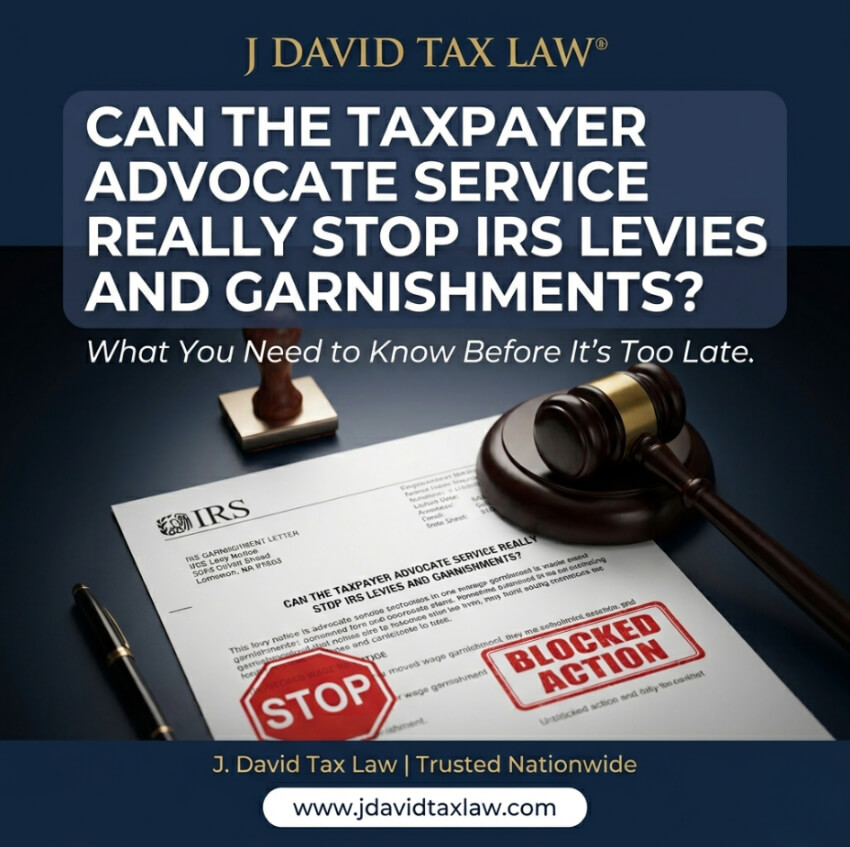
A bank levy is theIRS’s authority to seize funds from your bank account to satisfy unpaid tax debt. This is different from a lien, which is simply a claim against your property. A levy is actual seizure, the IRS takes your money and applies it to your tax debt.
When the IRS issues a bank levy, they send a notice to your bank instructing them to freeze your account and hold all funds for 21 days. After 21 days, if you haven’t taken action to release the levy, the bank transfers the frozen funds to the IRS. The levy captures whatever is in your account at the moment the bank receives the IRS notice, if you have $10,000 in your account when the levy hits, that entire $10,000 is frozen.
Bank levies are “one-time” seizures in the sense that they only capture funds present in the account at the moment of levy. However, the IRS can, and often does, issue multiple levies if the first levy doesn’t satisfy the full tax debt. Some Houston residents have experienced levies hitting their account every few weeks until the debt is satisfied or they take action to stop the levies.
The "Without Warning" Myth
The most important thing to understand is that IRS bank levies never truly come “without warning.” The IRS must follow strict legal procedures before seizing your bank account, and these procedures include multiple notices sent to your last known address.
Before the IRS can levy your bank account, they must send a series of notices including a final notice called a “Final Notice of Intent to Levy and Notice of Your Right to a Hearing” (typically IRS Letter 1058 or LT11). This notice must be sent at least 30 days before the IRS can execute a levy, and it provides you with the right to request a Collection Due Process hearing.
The problem is that many Houston taxpayers don’t receive these notices, don’t open them, don’t understand their significance, or have moved addresses without updating the IRS. Houston’s transient population, with people frequently moving between apartments in Midtown, houses in the suburbs like Katy or Sugar Land, and back downtown, creates situations where IRS notices go to old addresses.
Additionally, some taxpayers admit they’ve been ignoring IRS notices because they don’t know how to handle the debt or feel overwhelmed. By the time they realize the seriousness of the situation, the 30-day appeal period has passed and the levy hits their account. This makes it feel like the freeze came “without warning,” when legally the IRS provided required notice.
Texas Comptroller Bank Levies
While most of this article focuses on IRS bank levies, Houston business owners should also be aware that theTexas Comptroller has similar authority to levy bank accounts for unpaid state taxes including sales tax, franchise tax, and other business-related taxes.
Texas Comptroller levies follow similar procedures to IRS levies, notice must be provided, and there’s a hold period before funds are transferred. However, the Texas Comptroller’s enforcement can be even more aggressive for business tax debts because Texas lacks income tax and relies heavily on business tax revenue.
Houston business owners with both IRS and Texas Comptroller tax debts face the possibility of multiple levies from different authorities. In some cases, business accounts have been frozen simultaneously by both the IRS and the Texas Comptroller, creating cash flow crises that threaten business operations.
Houston Banking Considerations
Houston is home to several major banks and financial institutions, and the city’s sophisticated banking infrastructure means that levy notices are processed quickly and efficiently. Major banks like JPMorgan Chase, Wells Fargo, and Bank of America (all with significant Houston presence) have streamlined procedures for complying with IRS and Texas Comptroller levies.
For Houston business owners, bank account freezes are particularly devastating because they often affect payroll accounts, operating accounts, or merchant services accounts. A restaurant in Montrose or Rice Village can’t operate if its merchant services account is frozen and it can’t process credit card payments. A contractor in The Woodlands can’t make payroll if their operating account is levied on payday.
Joint accounts present special vulnerability. If you have a joint bank account with a spouse or business partner, and the IRS levies the account for your tax debt, all funds in the account are frozen, even funds that belong to the other account holder who doesn’t owe the tax debt. While the non-liable account holder may have grounds to claim their portion of the funds, this requires documentation and time, during which the account remains frozen.
Community banks and credit unions, which are popular in Houston neighborhoods and suburbs, generally process levies the same way as major banks. However, some Houston taxpayers have found that having a personal relationship with a local branch manager can help them receive advance warning that a levy notice has arrived, giving them a few hours to respond before the freeze takes effect.
The Critical 21-Day Window
Once your Houston bank account is frozen by an IRS levy, you have 21 days before the funds are transferred to the IRS. This 21-day period is your window to take action, and it’s absolutely critical that you act quickly.
During this 21-day hold period, you cannot access the frozen funds, but they haven’t been permanently seized yet. The bank is holding them pending the outcome of any actions you take to release the levy. If you successfully negotiate alevy release during the 21 days, the bank will unfreeze your account and you’ll regain access to your money.
However, if the 21 days expire without action, the bank transfers the funds to the IRS and they’re gone. At that point, your only recourse is to appeal the levy through more complex procedures or try to negotiate a refund if you can demonstrate the levy was erroneous or created significant hardship.
For Houston residents and business owners, this 21-day window often falls during critical times, rent or mortgage is due, payroll must be made, suppliers need payment. The urgency cannot be overstated. The moment you discover your account is frozen, you should contact a tax attorney immediately to begin the levy release process.
Immediate Steps When Your Houston Account Is Frozen
If you discover that the IRS or Texas Comptroller has frozen your Houston bank account, take these immediate steps:
First, contact a tax attorney immediately. AtJ. David Tax Law, we prioritize bank levy cases because of the urgent 21-day timeline. Our team of licensed attorneys and enrolled agents can often begin the levy release process within 24 hours of being retained.
Second, gather all IRS and Texas Comptroller notices you’ve received. Even if you haven’t opened them all, collect everything from these agencies. These notices contain critical information about your tax debt, the levies, and your appeal rights.
Third, document your financial hardship. If the frozen funds are needed for essential living expenses like rent, mortgage, utilities, food, or medical care, or for critical business expenses like payroll, document this immediately. Hardship is one of the strongest grounds for emergency levy release.
Fourth, don’t ignore your bank’s communications. Your Houston bank may send you notice about the levy and the 21-day hold period. Respond to these communications and ask if there are any procedures you need to follow to facilitate levy release once you’ve secured it.
Our team files emergency levy release requests based on economic hardship, demonstrating that the levy prevents you from meeting basic living expenses or critical business obligations. For Houston families with high housing costs, medical expenses, or dependent care costs, we present detailed financial analysis showing why the IRS must release the levy.
We simultaneously file or prepare Collection Due Process appeals if you’re still within your appeal period or if new levies have been issued. CDP hearings provide comprehensive review of your case and can result ininstallment agreements,Offers in Compromise, or other collection alternatives that prevent future levies.
For cases where immediate levy release isn’t possible, we negotiate alternative collection methods including installment agreements that the IRS will accept in exchange for releasing the levy. The IRS generally wants to collect the debt, and they’re often willing to release a levy if you enter into a compliance agreement.
Long-Term Solutions to Prevent Future Levies
Getting your current bank levy released is critical, but preventing future levies requires comprehensive resolution of your tax debt. Our Houston tax attorneys work with you to develop long-term solutions that protect your accounts from future seizure.
Installment agreements are the most common solution. By establishing a monthly payment plan that you can afford and maintain, you demonstrate good faith and compliance to the IRS. As long as you remain current on your installment agreement and continue filing and paying all current tax obligations, the IRS will not levy your accounts.
For Houston taxpayers who qualify,Offers in Compromise can settle tax debt for less than the full amount owed. This permanently resolves the debt and eliminates the risk of future levies. Our enrolled agents and tax attorneys prepare comprehensive OIC applications that maximize your chances of acceptance.
Currently Not Collectible status temporarily suspends all IRS collection activities if you’re experiencing severe financial hardship. While in CNC status, the IRS will not levy your bank accounts, garnish your wages, or pursue other collection actions. This provides breathing room while your financial situation improves.
Critical to all these solutions is staying current on your ongoing tax obligations. If you’re self-employed or have income not subject to withholding, make quarterly estimated tax payments. If you’re employed, ensure your withholding is adequate. The fastest way to break an installment agreement and trigger new levies is to accumulate new tax debt while paying off old debt.
Special Considerations for Houston Business Owners
Houston business owners face unique challenges with bank levies because business accounts often contain payroll funds, operating capital, and customer funds. A levy on a business account can create immediate crisis.
Payroll account protection is critical. While there’s no absolute protection for business bank accounts from IRS levies, we can often negotiate release of levied payroll accounts by demonstrating that the levy prevents payment of employee wages and payroll taxes. The IRS doesn’t want to force businesses into payroll tax non-compliance through their own collection actions.
Multiple entity structures common among Houston businesses can complicate levy situations. If you operate through multiple LLCs or corporations, the IRS may levy accounts across all entities if you’re personally liable for trust fund taxes or if you’ve commingled funds. Proper corporate structure and documentation helps protect accounts.
Trust fund tax priorities affect how business levies are handled. If your business owes payroll taxes and the IRS has assessed Trust Fund Recovery Penalties against you personally, they can levy both your business and personal accounts. These cases require sophisticated legal strategy to prevent cascading levies.
Take Immediate Action
If your Houston bank account has been frozen, every hour counts. Don’t wait for the 21-day hold period to expire. ContactJ. David Tax Law immediately at (888) 342-9436 for emergency bank levy assistance. We serve Houston, Sugar Land, The Woodlands, Katy, Pearland, and all Harris County communities with 24-48 hour emergency response for levy situations.
Frequently Asked Questions
1. How much notice does the IRS give before freezing my Houston bank account?
The IRS must send a Final Notice of Intent to Levy at least 30 days before executing a bank levy. However, if you’ve moved and haven’t updated your address with the IRS, the notice may go to an old address. Additionally, many Houston residents ignore or don’t understand IRS notices until it’s too late. While legally you receive 30+ days notice, practically the levy can feel sudden if you haven’t been monitoring IRS communications.
2. Can the IRS take all the money in my account?
Yes, when the IRS issues a bank levy, they freeze whatever funds are in your account at the moment the bank receives the levy notice. There are no federal exemptions for bank accounts like there are for wages. If you have $50,000 in your account, all $50,000 is frozen. This is why it’s critical to maintain multiple accounts and not keep all funds in one place if you’re at risk of levy.
3. What if the frozen funds are for payroll or essential expenses?
You can request emergency levy release based on economic hardship. We prepare detailed financial documentation showing that the levy prevents payment of essential living expenses (rent, utilities, food, medical) or critical business expenses (payroll, inventory). TheIRS has discretion to release levies that create immediate hardship, though they move slowly without attorney intervention.
4. Can I open a new bank account to avoid levies?
While you can legally open new accounts, the IRS can levy any bank account they discover. Modern IRS systems can identify new accounts relatively quickly. Opening multiple accounts doesn’t prevent levies, but it can provide some practical protection by ensuring not all your funds are in one place. However, the better approach is resolving the underlying tax debt through installment agreements or settlement.
5. Will my Houston bank notify me before complying with the levy?
Banks are not required to notify you before complying with an IRS levy, though some do as a courtesy. By the time you discover the freeze, the bank has already complied with the levy notice and frozen your account. This is why maintaining good relationships with local Houston bank branches can sometimes provide advance warning when levy notices arrive.
6. How long does it take to get a levy released?
With immediate attorney intervention, emergency levy releases can sometimes be secured within 48-72 hours for cases involving clear hardship. However, more complex cases may take 1-2 weeks. This is why the 21-day hold period is critical, it provides time to negotiate release before funds are transferred. Without attorney representation, levy releases can take months or may not be granted at all.
7. Can both the IRS and Texas Comptroller freeze my account simultaneously?
Yes, if you owe both federal and state taxes, you can face simultaneous levies from both the IRS and Texas Comptroller. This is particularly devastating for Houston business owners with sales tax debt and payroll tax debt. Ourtax attorneys coordinate resolution strategies across both authorities to prevent this scenario. For more information about stopping various collection actions, read our guide onstopping wage garnishment and levies.