




Last updated on February 2nd, 2026 at 09:46 pm
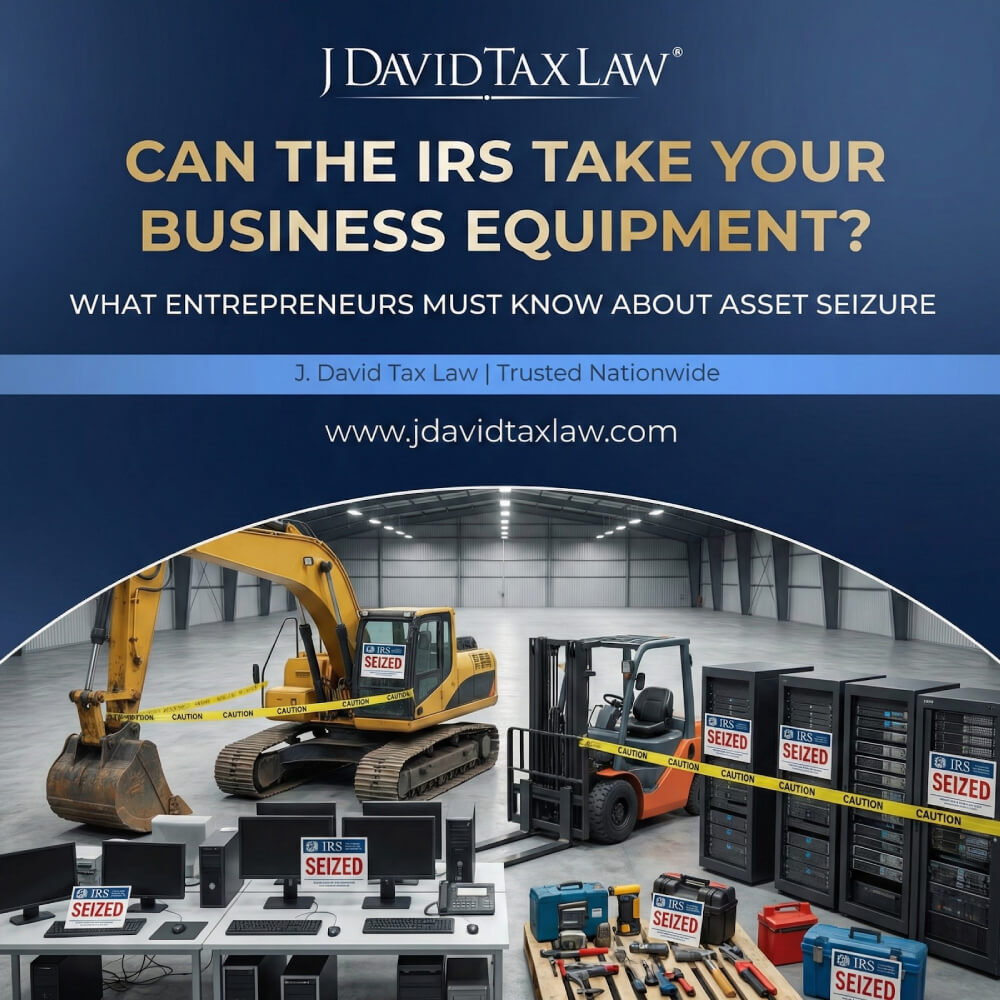
Yes. The IRS can seize business equipment, inventory, tools, machinery, vehicles, and other business assets if you owe unpaid business or personal taxes. When the IRS issues a levy, it has the legal authority to take nearly any asset you own to satisfy your tax debt, including the equipment you depend on to operate your business and generate income.
For many business owners, the threat of equipment seizure is not just financially damaging, it can shut down operations entirely. A restaurant that loses kitchen equipment, a contractor whose tools are seized, or a transportation company that loses vehicles cannot continue operating. The IRS understands this, yet still pursues business asset seizures when other collection methods fail.
Business owners often believe the IRS will not take essential equipment or that certain assets are protected. In reality, very few business assets are exempt from IRS levy. The agency follows strict legal procedures, but once those procedures are complete, the IRS can and will seize business property if the tax debt remains unpaid.
This guide explains exactly what business assets the IRS can take, how the seizure process works, what legal protections exist, and the immediate steps you must take to protect your business equipment before the IRS acts.
Key Takeaways:
- The IRS can seize business equipment, inventory, machinery, vehicles, and tools to collect unpaid taxes.
- Very few business assets are exempt, the IRS can take nearly anything you use in your business operations.
- The IRS must follow specific legal procedures before seizing assets, including multiple notices and a 30-day appeal period.
- Once the IRS begins the seizure process, you have limited time to stop it through payment, appeal, or negotiated resolution.
- Business owners can protect their equipment by responding early, setting up payment plans, or requesting Currently Not Collectible status.
- A tax attorney can often stop or delay IRS asset seizure and negotiate alternatives that keep your business operating.
What Business Assets Can the IRS Seize?
The IRS has broad authority to levy business assets when tax debts remain unpaid. While some personal property receives limited protection under federal law, business assets generally do not. The IRS treats business property as fair game for collection, and the agency can seize nearly any asset connected to your business operations.
Equipment and Machinery
The IRS can seize equipment and machinery essential to your business, including manufacturing equipment, restaurant appliances, medical devices, construction machinery, printing equipment, and specialized tools. Even if the equipment is financed or leased, the IRS can still seize your ownership interest or the equipment itself depending on the financing structure.
Business Vehicles
Vehicles used for business purposes are subject to IRS levy. This includes delivery trucks, service vans, company cars, construction vehicles, and fleet vehicles. The IRS does not make exceptions simply because the vehicle is necessary for daily operations or customer service.
Inventory and Stock
The IRS can seize inventory, finished goods, raw materials, and products held for resale. For retail businesses, restaurants, or manufacturers, losing inventory can immediately halt revenue and force temporary or permanent closure.
Office Equipment and Furniture
Computers, servers, office furniture, phone systems, and other office assets can all be seized. The IRS does not distinguish between “essential” and “non-essential” office items when levying business property.
Business Real Estate
If your business owns the building or land where it operates, the IRS can seize that property as well. This includes commercial buildings, warehouses, storefronts, and land used for business purposes.
Accounts Receivable and Business Income
The IRS can levy your business bank accounts, accounts receivable, and any income owed to your business by clients or customers. This effectively freezes your cash flow and prevents you from paying employees, vendors, or operating expenses.
What Assets Are Protected From IRS Seizure?
Federal law provides limited exemptions that protect certain personal property from IRS levy, but these protections are narrow and rarely apply to business assets. Most business owners cannot rely on these exemptions to save their equipment.
Personal Property Exemptions (Do Not Apply to Business Assets)
Certain personal items receive statutory protection, including:
- Necessary clothing and school books
- Undelivered mail
- $11,980 for §6334(a)(2) (fuel, provisions, furniture, household personal effects, etc.)
- $5,990 for §6334(a)(3) (books and tools necessary for the trade/business/profession)
- Unemployment benefits
- Certain pension and retirement accounts
- Workers’ compensation benefits
- Child support payments
The “tools of a trade” exemption is often misunderstood. While it provides up to $4,950 in protection, this amount is far too low to cover the actual value of most business equipment. A single piece of machinery, a work truck, or a set of professional tools often exceeds this limit, leaving the excess value subject to seizure.
Why Business Owners Cannot Rely on Exemptions
- The exemptions were designed to protect individuals, not businesses.
- The dollar limits are extremely low and have not kept pace with inflation or the cost of modern equipment.
- The IRS interprets exemptions narrowly and rarely grants additional protection.
- Business property used to generate income is considered a priority target for collection.
If you are counting on exemptions to protect your business equipment, you are taking a serious risk. The better approach is to resolve the tax debt before the IRS begins seizing assets.
How the IRS Business Asset Seizure Process Works
The IRS does not seize business assets without warning. Federal law requires the IRS to follow a specific sequence of notices and provide taxpayers with opportunities to resolve the debt before enforcing a levy. Understanding this timeline is critical because your ability to stop a seizure depends on acting quickly at each stage.
Step 1: IRS Assessment and Demand for Payment
The process begins when the IRS assesses a tax liability and sends a bill demanding payment. This initial notice explains how much you owe and provides a deadline to pay or respond. If you ignore this notice, the IRS moves forward with collection.
Step 2: Series of Collection Notices
If you do not pay or set up a resolution, the IRS sends additional notices over several weeks or months. These notices become progressively more serious and warn that enforced collection is approaching. Common notices include CP14, CP501, CP503, and CP504.
Step 3: Final Notice of Intent to Levy
The Final Notice of Intent to Levy is the last warning before the IRS takes enforcement action. This notice is typically Letter 1058 or LT11, and it arrives by certified mail. The notice informs you that the IRS intends to levy your property and rights to property, including business assets, bank accounts, and income.
This notice includes your right to request a Collection Due Process (CDP) Hearing by filing IRS Form 12153 within 30 days. Filing this form pauses most IRS collection actions, including asset seizure, while your case is reviewed by the Independent Office of Appeals.
Step 4: 30-Day Appeal Period
After the Final Notice of Intent to Levy is issued, you have 30 days to respond. During this time, you can:
- Pay the tax debt in full
- Set up an installment agreement or payment plan
- Request an Offer in Compromise
- Apply for Currently Not Collectible status
- File Form 12153 to request a CDP Hearing
If you take no action within this 30-day period, the IRS can proceed with the levy.
Step 5: IRS Levy and Asset Seizure
Once the 30-day period expires, the IRS can issue a levy and seize your business assets. The IRS may send revenue officers to your business location, remove equipment, inventory, or vehicles, and sell the property at auction to satisfy your tax debt.
The IRS does not need a court order to seize business assets. The agency has the authority to take property directly under federal tax law.
Real Case Example: Business Equipment Seizure Stopped
Detail | Information |
Client | Small Construction Company – North Carolina |
Tax Debt | $87,000 in unpaid payroll taxes |
IRS Action | Final Notice of Intent to Levy issued; revenue officer scheduled to visit job site and seize equipment |
Attorney Intervention | Immediate emergency hold requested, Form 12153 filed to pause the levy, and structured installment agreement proposed during CDP Hearing. |
Outcome | The IRS approved the payment plan, and the seizure was permanently stopped. |
Assets Protected | Over $120,000 in machinery and vehicles. |
What Happens During an IRS Business Asset Seizure?
WHAT HAPPENS IF YOU IGNORE THIS NOTICE
Wage Garnishment (50–70% of paycheck)
Bank Account Levy (Frozen & Seized)
Loss of CDP Hearing Rights
No Tax Court Appeal Option
Property Seizure Authorization
When the IRS decides to seize business assets, the process is direct and often happens quickly. Understanding what to expect can help you respond appropriately and protect your rights during the seizure.
IRS Revenue Officers Arrive On-Site
IRS revenue officers typically arrive at your business location in person. They identify themselves, present their credentials, and explain that they are there to seize property to satisfy your tax debt. They may be accompanied by local law enforcement, though this is not always the case.
Assets Are Identified and Inventoried
The revenue officers identify which assets will be seized. They take an inventory of equipment, vehicles, or other property and prepare documentation showing what is being taken. The IRS generally prioritizes high-value items that can be sold quickly.
Property Is Physically Removed
The IRS removes the property from your business location. In some cases, they may secure the property on-site and arrange for transport later. Once the property is removed, you lose access to it immediately, even if it is essential to your operations.
Assets Are Sold at Auction
The IRS sells seized business property at public auction. The proceeds from the sale are applied to your tax debt, including any penalties and interest. If the sale does not cover the full amount owed, you remain responsible for the remaining balance.
Excess Proceeds Are Returned
If the sale generates more money than your total tax debt, the IRS is required to return the excess to you. However, this rarely happens, because the IRS typically sells assets at below-market value and the debt often includes significant penalties and interest.
How to Stop IRS Seizure of Business Equipment
If you have received a Final Notice of Intent to Levy or know that the IRS is moving toward asset seizure, you must act immediately. Waiting until the IRS arrives at your business location leaves you with almost no options.
File Form 12153 to Request a Collection Due Process Hearing
Filing Form 12153 within 30 days of receiving the Final Notice stops most IRS collection actions, including asset seizure. This gives you time to work with the IRS Independent Office of Appeals to negotiate a resolution.
Set Up an IRS Installment Agreement
An installment agreement allows you to pay your tax debt in monthly payments over time. Once the agreement is in place, the IRS will not seize your business assets as long as you remain in compliance.
Request Currently Not Collectible (CNC) Status
If your business cannot afford to pay the debt without causing financial hardship, you may qualify for CNC status. This temporarily pauses IRS collection, including levies and seizures, while you work to stabilize your business.
Apply for an Offer in Compromise
An Offer in Compromise allows you to settle your tax debt for less than the full amount owed if you can demonstrate financial hardship. While your application is being reviewed, the IRS generally will not seize assets.
Pay the Tax Debt in Full
If you have the financial ability to pay the debt, doing so immediately stops the seizure process. This is often the fastest and most certain way to protect your business equipment.
Hire a Tax Attorney Immediately
A tax attorney can communicate directly with the IRS on your behalf, file the appropriate forms, negotiate resolutions, and stop or delay asset seizure. In many cases, an attorney can prevent seizure even after the 30-day period has expired by presenting a viable resolution plan.
STOP THE LEVY IN 48 HOURS
Our tax attorneys can file Form 12153, pause IRS collection, and protect your income.
Call immediately for emergency assistance.
When to Hire a Tax Attorney for Business Asset Protection
You should hire a tax attorney as soon as you receive a Final Notice of Intent to Levy or any notice indicating that the IRS is preparing to seize assets. An attorney can step in quickly, file protective documents, negotiate with the IRS, and present a resolution that keeps your business operating.
Signs you need an attorney immediately:
- You received a Final Notice of Intent to Levy (Letter 1058 or LT11)
- A revenue officer contacted you or visited your business
- You have unpaid payroll taxes or trust fund penalties
- The IRS froze your business bank account
- You cannot afford to pay the full tax debt
- You need to keep your business equipment to stay in operation
- You are unsure how to respond to IRS notices
What a tax attorney can do for you:
- File Form 12153 to stop the levy and request a CDP Hearing
- Communicate directly with the IRS on your behalf
- Negotiate payment plans, settlements, or hardship status
- Represent you during Appeals hearings
- Prevent or delay asset seizure while a resolution is prepared
- Protect your rights throughout the collection process
If the IRS is threatening to seize your business equipment, call J. David Tax Law immediately at (888) 342-9436. Our tax attorneys have stopped asset seizures and protected businesses across the country.
Conclusion
The IRS can seize your business equipment, vehicles, inventory, and other assets if you owe unpaid taxes. While the IRS must follow legal procedures and provide notice before taking enforcement action, these protections are limited, and the agency will move forward with asset seizure if you do not respond.
The key to protecting your business is acting immediately after receiving IRS collection notices. Filing Form 12153, setting up a payment plan, or requesting hardship status can stop the IRS from seizing your assets and give you the time you need to resolve the debt without shutting down your business.
If you are facing IRS asset seizure or have received a Final Notice of Intent to Levy, do not wait. Contact J. David Tax Law today at (888) 342-9436 for a confidential consultation with a tax attorney who can protect your business and negotiate a resolution with the IRS.
Frequently Asked Questions
Yes. The IRS can seize business equipment, machinery, vehicles, inventory, and tools to collect unpaid taxes. Very few business assets are exempt from IRS levy, and the agency can take nearly any property you use to operate your business.
Very few business assets are protected. Federal law provides a “tools of trade” exemption of up to $4,950, but this amount is too low to protect most business equipment. The IRS can seize nearly any business property that exceeds this limit.
You can stop IRS asset seizure by filing Form 12153 within 30 days of receiving a Final Notice of Intent to Levy, setting up an installment agreement, requesting Currently Not Collectible status, applying for an Offer in Compromise, or paying the tax debt in full.
Yes. The IRS does not need a court order to seize business assets. The agency has the legal authority under federal tax law to levy business property after providing proper notice and allowing time for appeal.
The IRS removes the equipment from your business location and sells it at public auction. The proceeds are applied to your tax debt. If the sale does not cover the full amount owed, you remain responsible for the remaining balance.